
What Is a Sales Pipeline? A Guide for Sales Leaders
What Is a Sales Pipeline? A Guide for Sales Leaders
TL;DR:
- A sales pipeline visually tracks prospects through each buying stage, aiding forecasting and deal management. Its effectiveness depends on buyer-verified stage advancement, standardized definitions, and automation to ensure data accuracy. Proper pipeline discipline transforms it into a reliable instrument for consistent revenue growth.
A sales pipeline is a visual, structured representation of where prospects stand at every stage of the buying process, from first contact through to a closed deal. Sales leaders use it to track deal progress, prioritize rep activity, and forecast revenue with confidence. Platforms like Salesforce, Pipedrive, HubSpot, and Monday CRM have made pipeline management a standard practice across B2B and B2C organizations. Without a defined pipeline, sales teams operate on instinct rather than data, and that gap costs deals. Understanding what a sales pipeline is, how it works, and how to maintain it is the foundation of any high-performing sales operation.
What is a sales pipeline and why does it matter?
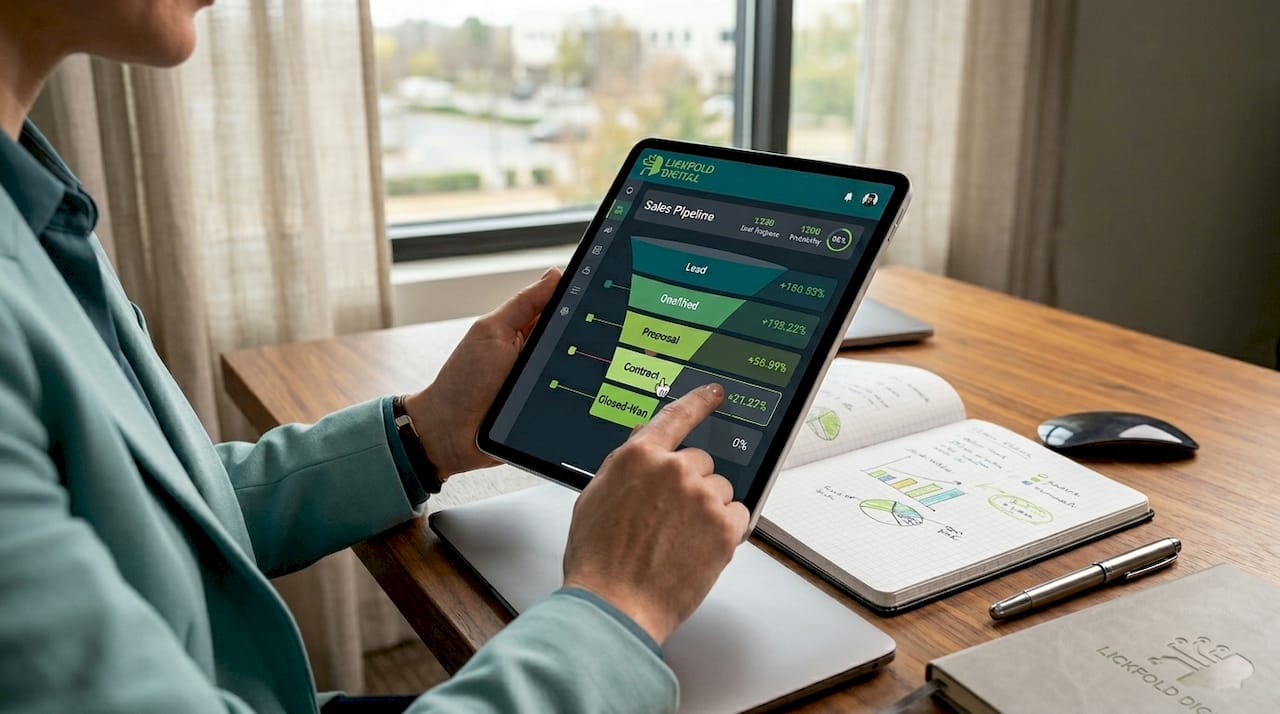
A sales pipeline is a visual tool that shows where every active prospect sits in the sales process, what actions are needed next, and which deals are at risk. IBM describes the pipeline’s core value as making deal status and next steps explicit, so sellers know exactly where to focus rather than guess. That clarity is not a luxury. It is the difference between a team that closes predictably and one that scrambles at quarter-end.
The pipeline also serves as the primary input for revenue forecasting. When stage definitions are accurate and deal data is current, sales managers can project monthly and quarterly revenue with reasonable precision. When they are not, forecasts become wishful thinking. Salesforce, Pipedrive, and Zendesk all center their CRM products around pipeline visibility for exactly this reason.
A well-managed pipeline also reveals process problems early. If deals consistently stall at the proposal stage, that is a signal worth investigating. If the average deal takes 90 days to close but your pipeline shows 40-day cycles, your stage criteria are probably too loose. The pipeline does not just track deals. It diagnoses your sales process in real time.
What are the core stages of a sales pipeline?
Pipeline stages represent the discrete steps a prospect moves through before becoming a customer. Most B2B sales pipelines follow a sequence of six stages: prospecting, qualifying, initial contact, proposal, negotiation, and close. Each stage should reflect a confirmed buyer milestone, not just a seller action. Weak exit criteria cause optimistic stage advancement, which distorts forecasting and gives sales managers a false picture of pipeline health.
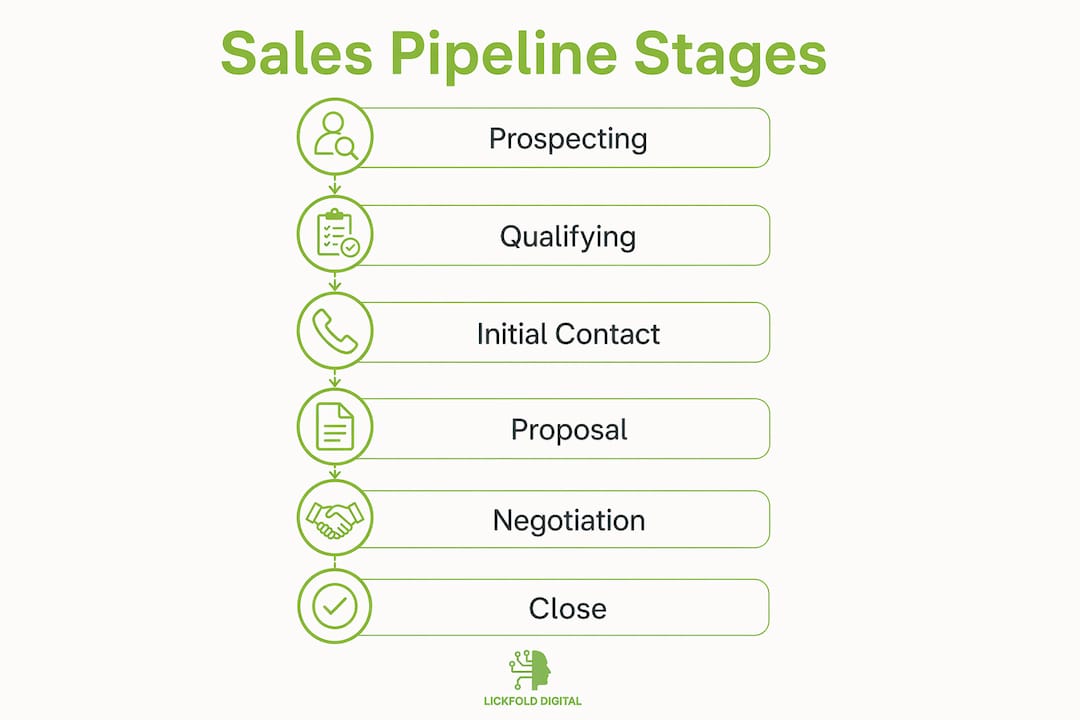
Here is how common pipeline stages map across different sales environments:
| Stage | B2B SaaS | Professional Services | Enterprise Sales |
|---|---|---|---|
| Prospecting | ICP research, outbound outreach | Referral identification | Account mapping |
| Qualifying | BANT or MEDDIC scoring | Discovery call | Multi-stakeholder discovery |
| Initial contact | Demo scheduled | Intro meeting | Executive briefing |
| Proposal | Pricing sent | Statement of work drafted | RFP response submitted |
| Negotiation | Legal and procurement review | Contract terms discussion | Procurement and legal review |
| Close | Contract signed | Engagement letter signed | Purchase order issued |
The key principle across all of these is that stage advancement requires buyer confirmation, not just seller effort. Sending a proposal does not mean the buyer has reviewed it. Scheduling a demo does not mean the prospect is qualified. Stages must reflect what the buyer has done, not what the rep has done.
Pro Tip: Define one buyer-confirmed action as the exit criterion for each stage. For example, the proposal stage is only complete when the prospect confirms they have reviewed the document and are ready to discuss terms. This single rule eliminates most stage inflation.
How does a sales pipeline differ from a sales funnel?
The terms “sales pipeline” and “sales funnel” are used interchangeably in many organizations, but they measure fundamentally different things. Pipeline tracks deal stages and rep activity, while a funnel tracks the customer journey and lead conversion rates. Confusing the two leads to misaligned reporting and poor strategic decisions.
Here is a direct comparison of the two concepts:
- Focus: The pipeline is seller-focused. It shows what reps are doing and where deals sit. The funnel is buyer-focused. It shows how leads move from awareness to purchase.
- Primary metric: Pipeline health is measured by deal count, deal value, and stage velocity. Funnel health is measured by conversion rates between stages and lead drop-off points.
- Time horizon: Pipelines are used for short-to-medium-term forecasting. Funnels are used to evaluate marketing and lead generation effectiveness over longer periods.
- Who uses it: Sales managers and reps own the pipeline. Marketing and demand generation teams own the funnel.
- Output: The pipeline produces a revenue forecast. The funnel produces a lead quality and volume assessment.
Both tools are complementary. A leaky funnel starves the pipeline of qualified leads. A poorly managed pipeline wastes the leads the funnel delivers. Sales leaders who understand both can diagnose problems at any point in the revenue process, from initial brand awareness through to contract signature.
What are best practices for managing pipeline health?
Pipeline health refers to the overall quality and accuracy of the deals in your pipeline at any given time. A healthy pipeline has enough deals at each stage, realistic close dates, and stage definitions that reflect actual buyer behavior. Standardized stage definitions are the foundation of reliable metrics like conversion rates and sales velocity.
Follow these practices to maintain a pipeline that produces accurate forecasts and consistent results:
- Define stage exit criteria based on buyer milestones. Every stage must have one confirmed buyer action that triggers advancement. This prevents stage inflation and keeps forecast data honest.
- Conduct weekly pipeline reviews. Review every deal that has not moved in 14 days. Stale deals inflate pipeline value and distort forecasting. Remove or reclassify them promptly.
- Standardize your sales cycle length by segment. SMB deals, mid-market deals, and enterprise deals have different average cycle lengths. Mixing them in a single pipeline without segmentation produces unreliable velocity data.
- Enforce data hygiene at the point of entry. Reps should update deal stages, close dates, and next steps immediately after every buyer interaction. Retroactive updates introduce errors.
- Track conversion rates by stage, not just total pipeline value. A large pipeline with low stage-to-stage conversion rates is a warning sign, not a strength.
Pro Tip: Set a maximum age for each pipeline stage based on your historical sales cycle data. Any deal that exceeds that age without movement should trigger an automatic manager review. This one rule prevents dead deals from inflating your pipeline for months.
A common and costly mistake is what Monday CRM calls “stage inflation,” where deals advance because a rep sent a proposal or made a call, not because the buyer took a meaningful step forward. Advancing deals prematurely corrupts forecast accuracy and creates false confidence in pipeline coverage.
How does sales pipeline automation improve sales performance?
Sales pipeline automation is the use of CRM workflows, AI-assisted task management, and integration rules to handle repetitive pipeline tasks without manual rep input. Automation handles repeatable tasks like follow-up creation, lead routing, stage updates, and reminder scheduling, freeing reps to focus on conversations that actually close deals.
The distinction between pipeline management and sales process automation matters here. Pipeline automation removes administrative tasks but does not replace the strategic steps in the sales process itself. A rep still needs to run a discovery call, build a business case, and negotiate terms. Automation handles everything around those activities so reps spend more time on them.
Here is how leading platforms approach automation:
| Automation feature | Platform examples | Impact |
|---|---|---|
| Automatic lead capture and routing | Salesforce, HubSpot | Eliminates manual assignment delays |
| Follow-up reminders and sequences | Pipedrive, HubSpot | Reduces missed follow-ups |
| Stage updates based on email activity | Salesforce, Pipedrive | Keeps pipeline data current without rep input |
| AI-assisted deal scoring | Salesforce Einstein, HubSpot AI | Prioritizes high-probability deals |
| Automated reporting and forecasting | Monday CRM, Salesforce | Reduces time spent on manual reporting |
For B2B teams running high-volume outbound, AI workflow automation goes further by handling prospect identification, personalized outreach sequencing, and reply qualification before a human rep ever gets involved. This is where automation shifts from a productivity tool to a pipeline generation engine.
Pro Tip: Start automating the tasks that happen most frequently and require the least judgment. Follow-up reminders, lead assignment, and stage-change notifications are the highest-ROI automation targets for most sales teams. Save AI-assisted deal scoring for after your stage definitions are clean.
How to build a sales pipeline that drives consistent revenue
Building a pipeline that produces reliable results requires more than setting up stages in a CRM. It requires deliberate design, clear ownership, and a commitment to continuous adjustment based on real performance data.
- Define your ideal customer profile before building stages. Your pipeline stages should reflect how your specific buyers make decisions. A pipeline built for a 30-day SMB sales cycle looks nothing like one built for a 180-day enterprise deal. Start with the buyer, not the template.
- Map one specific sales activity to each stage. Prospecting requires outbound outreach. Qualifying requires a discovery call. Proposal requires a documented business case. Each stage should have a defined rep action and a defined buyer confirmation.
- Set measurable goals for each stage. Define target conversion rates, average stage duration, and minimum deal counts at each level. These benchmarks make pipeline reviews objective rather than subjective.
- Build your pipeline in a CRM from day one. Spreadsheet-based pipelines break down at scale. Salesforce, Pipedrive, and Monday CRM all offer configurable pipeline views that support automation, reporting, and collaboration.
- Review and adjust quarterly. Sales cycles change, buyer behavior shifts, and new objections emerge. A pipeline built in Q1 of one year may not reflect reality by Q3. Treat your pipeline structure as a living document, not a fixed system.
For teams looking to accelerate the prospecting stage specifically, AI-driven prospecting tools can identify and engage decision-makers at scale before they ever enter your pipeline. This compresses the top of the pipeline and improves the quality of deals that reach the qualification stage. You can also explore a step-by-step pipeline build guide for a more detailed walkthrough of the design process.
Key takeaways
A sales pipeline drives consistent revenue only when stage definitions reflect buyer milestones, data hygiene is enforced, and automation handles repetitive tasks so reps focus on closing.
| Point | Details |
|---|---|
| Pipeline definition | A visual tool tracking deal stages from first contact to close, used for forecasting and rep prioritization. |
| Stage criteria | Exit criteria must be based on confirmed buyer actions, not seller activity, to prevent forecast distortion. |
| Pipeline vs. funnel | Pipelines track deal and rep activity; funnels track lead conversion and customer journey. |
| Pipeline health | Weekly reviews, standardized stage lengths, and data hygiene keep metrics reliable and forecasts accurate. |
| Automation role | CRM and AI automation removes administrative tasks, improving consistency without replacing strategic sales steps. |
The pipeline problem most sales leaders won’t admit
After working with B2B sales teams across multiple industries, the most common pipeline problem is not a lack of tools. Every team has Salesforce, Pipedrive, or HubSpot. The problem is that most pipelines are built around what reps do, not what buyers confirm. Stage names like “Proposal Sent” or “Demo Completed” are seller actions, not buyer milestones. They feel like progress, but they tell you nothing about whether the deal is actually moving.
The consequence is a pipeline full of deals that look active but are functionally dead. Reps advance deals to hit activity targets. Managers see a healthy pipeline and forecast confidently. Then the quarter ends and half the pipeline evaporates. I have seen this pattern repeat across organizations of every size.
The fix is not a new CRM or a new automation tool. It is a conversation about what “qualified” actually means in your specific sales context, and the discipline to enforce it. Once you define stage exit criteria around buyer behavior, everything else, including forecasting, coaching, and automation, gets dramatically more accurate. The pipeline becomes a real-time map of revenue probability rather than a log of rep activity.
AI and automation are genuinely changing what is possible in pipeline management. Lickfold’s approach to AI pipeline predictability is a good example of how machine learning can surface deal risk and forecast accuracy in ways that manual review cannot. But none of that works if the underlying stage data is unreliable. Clean the foundation first.
— Duarte
How Lickfold can build your pipeline from the top down
Lickfold Digital builds AI-powered outbound systems that fill the top of your sales pipeline with qualified B2B leads before your reps ever make contact. The platform deploys dedicated AI agents to identify decision-makers within your ideal customer profile, execute personalized multi-touch outreach campaigns, and qualify replies before passing opportunities to your sales team. The result is a predictable, scalable flow of warm leads entering your pipeline at the qualification stage, not the cold prospecting stage. If your team is spending too much time on manual prospecting and not enough time closing, reach out to Lickfold to see how an AI-driven prospecting system fits your pipeline strategy.
FAQ
What is a sales pipeline in simple terms?
A sales pipeline is a visual framework that shows where every prospect sits in the buying process, from initial contact to closed deal. Sales teams use it to track deal progress, prioritize activities, and forecast revenue.
What are the typical stages of a sales pipeline?
Most pipelines include prospecting, qualifying, initial contact, proposal, negotiation, and close. Each stage should be defined by a confirmed buyer action, not just a seller activity.
How is a sales pipeline different from a sales funnel?
A sales pipeline tracks deal stages and rep activity, while a sales funnel tracks the customer journey and lead conversion rates. Both are useful, but they answer different questions about your revenue process.
What is sales pipeline automation?
Sales pipeline automation uses CRM workflows and AI to handle repetitive tasks like lead routing, follow-up reminders, and stage updates. Platforms like Salesforce, HubSpot, and Pipedrive all offer native automation features that reduce manual workload for sales reps.
How do you measure sales pipeline health?
Pipeline health is measured by deal count per stage, stage conversion rates, average deal age, and sales velocity. Reliable pipeline metrics depend on standardized stage definitions and consistent data entry from reps.