
B2B decision maker targeting: 7 steps for 2026 outreach
B2B decision maker targeting: 7 steps for 2026 outreach
Reaching the right decision makers in B2B sales remains one of the most challenging aspects of modern outreach. Many sales professionals waste countless hours targeting the wrong contacts, crafting messages that never reach the people who actually make purchasing decisions, and watching their conversion rates stagnate. The complexity of B2B buying groups, which now involve 13 people on average, demands a more strategic approach than ever before. This guide delivers seven actionable steps to help you target B2B decision makers with precision in 2026, transforming your outreach from scattered attempts into systematic conversions.
Table of Contents
- Understanding B2B Decision Makers And Buying Groups
- Preparing To Target: Segmentation, Prioritization, And Lead Scoring
- Executing Targeted Outreach With Personalized Messaging And AI Tools
- Verifying Success And Refining Targeting Strategies
- How Lickfold Digital Can Help You Master B2B Decision Maker Targeting
Key takeaways
| Point | Details |
|---|---|
| Target multiple roles | Effective B2B outreach requires engaging diverse stakeholders across buying groups, not just one contact. |
| Use data-driven scoring | Lead scoring models help prioritize high-potential prospects and allocate resources efficiently. |
| Personalize every message | Generic outreach causes 73% of buyers to actively avoid suppliers, killing engagement before it starts. |
| Leverage AI tools | AI-driven campaigns can deliver 2.3x more meetings booked while reducing acquisition costs significantly. |
| Monitor and refine constantly | Continuous measurement and iteration based on real performance data maximizes targeting accuracy. |
Understanding B2B decision makers and buying groups
B2B decision makers span a wide range of roles within target organizations. C-level executives set strategic direction and approve major budgets. VPs and department heads evaluate solutions against operational needs and champion purchases internally. Middle managers provide ground-level insights about daily pain points and implementation requirements. Technical evaluators assess product fit and integration complexity. Each role brings distinct priorities, concerns, and influence over the final purchase decision.
The reality of B2B purchasing has evolved into a group activity that involves 13 people on average and spans at least two departments in 89% of cases. This expansion creates significant complexity for sales professionals attempting to navigate organizational structures. Research shows that buying groups range from five to 16 people and 74% experience unhealthy conflict during the decision process. These conflicts arise from competing priorities, budget constraints, and differing assessments of solution value across departments.
Simple one-to-one targeting strategies fail in this environment because they ignore the collaborative nature of B2B purchases. When you focus exclusively on a single contact, you miss the opportunity to address concerns from other stakeholders who can block deals or slow momentum. Understanding the full buying group composition allows you to craft multi-threaded outreach that builds consensus rather than relying on one champion to convince everyone else.
Common roles in buying groups include:
- Economic buyers who control budgets and approve final expenditures
- Technical buyers who evaluate product specifications and integration requirements
- User buyers who will interact with the solution daily and assess usability
- Coaches who provide internal intelligence and guide you through organizational politics
- Blockers who may resist change or prefer competing solutions
Recognizing these roles within your target accounts enables you to develop messaging that resonates with each stakeholder’s unique perspective. Lickfold Digital AI Experts specialize in mapping these complex buying groups using AI-driven research that identifies key players and their relationships within target organizations.
Preparing to target: segmentation, prioritization, and lead scoring
Effective targeting begins long before you send the first message. Proper preparation through segmentation and prioritization ensures your outreach efforts focus on accounts most likely to convert. The four-step segmentation process includes pre-segmentation, segmentation, implementation, and evaluation, providing a structured framework for dividing your total addressable market into manageable, relevant groups.

Pre-segmentation involves gathering data about your market and identifying broad categories based on industry, company size, geography, and technology stack. Segmentation refines these categories by analyzing behavioral patterns, pain points, and buying signals that indicate readiness to purchase. Implementation means deploying targeted campaigns tailored to each segment’s characteristics. Evaluation measures results and adjusts segments based on actual performance data.
Lead scoring models take segmentation further by assigning numerical values to prospects based on their likelihood to convert. Lead prioritization is critical for allocating resources effectively and maximizing the return on your digital marketing investments. Scoring considers factors like company fit, engagement level, budget authority, and timing signals. High-scoring leads receive immediate attention from your best sales resources, while lower-scoring prospects enter nurture sequences until they demonstrate stronger buying intent.
Prioritizing leads delivers multiple benefits beyond simple efficiency. You reduce wasted effort on accounts that lack budget or authority. You increase conversion rates by focusing energy where it matters most. You shorten sales cycles by engaging ready buyers at the optimal moment. You improve forecasting accuracy by understanding which segments consistently produce revenue.
Developing an initial lead scoring system:
- Identify 10-15 attributes that correlate with successful deals in your historical data
- Assign point values to each attribute based on its predictive strength
- Set threshold scores that define hot, warm, and cold lead categories
- Test the model on a sample of recent leads to validate accuracy
- Deploy the scoring system across your CRM and marketing automation platform
- Monitor conversion rates by score range and adjust weights quarterly
Pro Tip: Validate your lead scoring model every quarter by comparing predicted conversion rates against actual results, then adjust attribute weights to reflect changing market conditions and buyer behavior patterns.
Integrating lead generation with AI amplifies these preparation steps by automating data collection, identifying patterns humans might miss, and continuously updating scores based on real-time engagement signals.
Executing targeted outreach with personalized messaging and AI tools
Execution separates preparation from results. The quality of your outreach messaging directly determines whether decision makers engage or ignore your attempts to connect. Research confirms that 73% of B2B buyers actively avoid suppliers who send irrelevant outreach, making personalization a non-negotiable requirement for successful campaigns.
Personalization extends far beyond inserting a prospect’s name into a template. Effective personalized messaging addresses the specific challenges faced by each decision maker’s role, references their company’s recent activities or initiatives, and connects your solution to outcomes they care about. A CFO needs to see ROI projections and risk mitigation. A VP of Operations wants efficiency gains and implementation timelines. A technical director focuses on integration complexity and support quality.
| Approach | Engagement Rate | Cost Per Lead | Time to Results |
|---|---|---|---|
| Traditional manual outreach | 2-4% response | $150-300 | 4-6 weeks |
| AI-driven targeted campaigns | 8-12% response | $50-100 | 1-2 weeks |
| Hybrid AI plus human touch | 12-18% response | $75-150 | 2-3 weeks |
AI tools transform outreach execution by analyzing vast amounts of data to identify optimal messaging angles, timing, and channels for each prospect. Snowflake’s ABM team achieved a 2.3x lift in meetings booked and a 54% increase in CTR by deploying AI for targeted campaigns that personalized content at scale. These tools monitor engagement patterns, adjust messaging mid-campaign based on response data, and allocate budget toward highest-performing segments automatically.
Best practices for crafting personalized content:
- Research each target account’s recent news, funding rounds, leadership changes, and strategic initiatives
- Map your solution’s capabilities to specific pain points mentioned in job postings or company communications
- Reference mutual connections or shared experiences to build credibility quickly
- Vary your messaging across multiple stakeholders within the same account to address diverse priorities
- Test different value propositions and call-to-action formats to identify what resonates with each segment
AI-powered platforms enable you to execute these practices at scale without sacrificing quality. They generate initial drafts based on prospect data, suggest improvements based on historical performance, and ensure consistency across multi-touch sequences. The technology handles repetitive research and drafting tasks, freeing your team to focus on strategic relationship building and high-value conversations.
Pro Tip: Monitor reply sentiment and engagement depth, not just open rates, to identify which messages truly resonate with decision makers and drive meaningful conversations forward.
Explore proven B2B outreach strategies that combine AI efficiency with human insight to maximize your campaign performance and pipeline growth.
Verifying success and refining targeting strategies
Measurement transforms outreach from guesswork into science. Tracking the right metrics reveals which targeting strategies work, which messages resonate, and where you should invest additional resources. Key performance indicators for B2B decision maker targeting include meetings booked per 100 contacts, conversion rates from meeting to opportunity, average deal size by segment, and qualitative feedback from prospects about message relevance.
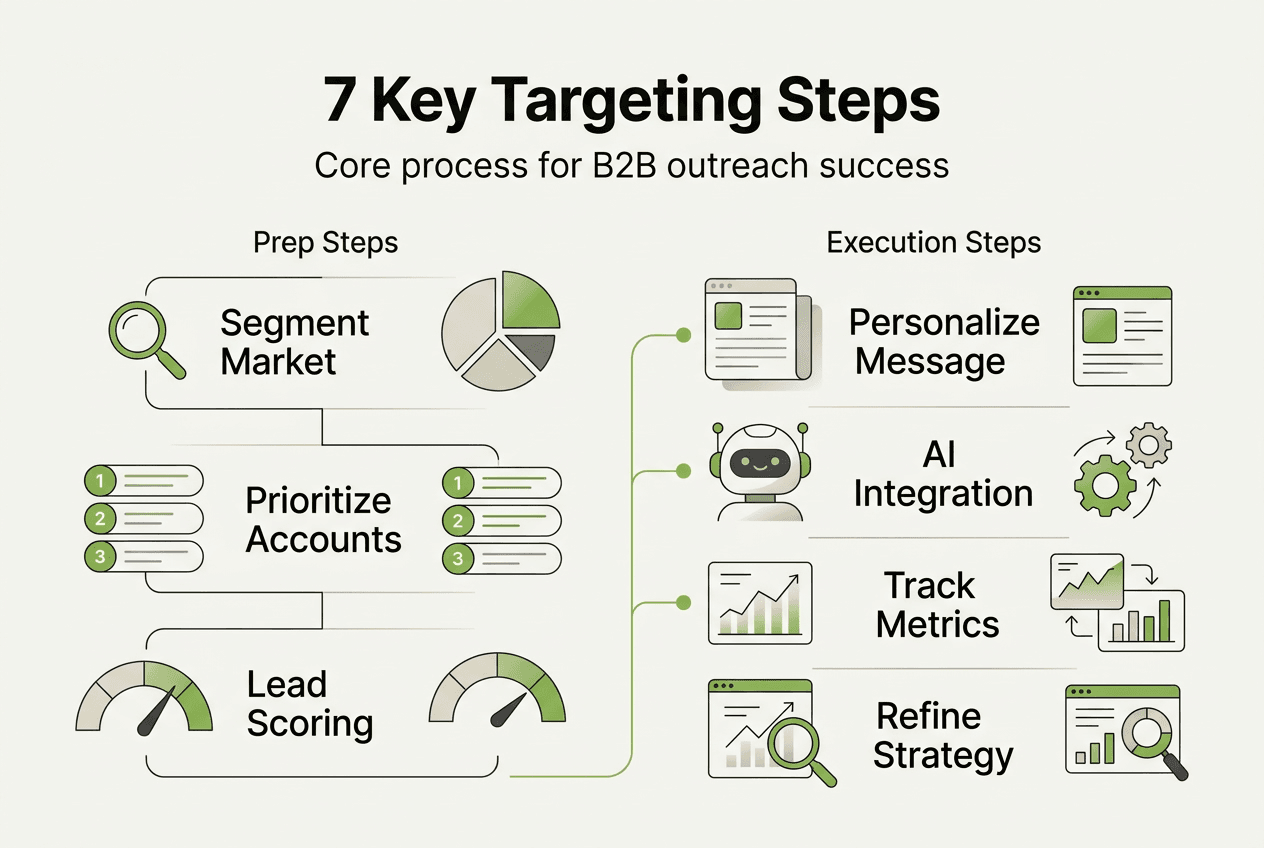
Meetings booked represents the most immediate indicator of targeting accuracy. If your outreach generates meetings with the right decision makers, your segmentation and messaging are working. Low meeting rates signal misalignment between your targeting criteria and actual buyer needs. Conversion rates from meeting to qualified opportunity reveal whether you’re reaching people with genuine authority and budget. High meeting counts mean nothing if those conversations don’t advance toward revenue.
Common challenges in B2B selling stem from the complex group dynamics discussed earlier. Internal buyer conflicts can derail deals even when individual stakeholders support your solution. You might build strong rapport with a champion only to discover that a technical evaluator or CFO blocks the purchase due to concerns your champion cannot address. Navigating these situations requires mapping the full buying group early, identifying potential blockers, and proactively addressing their concerns before they become deal killers.
| Buyer Team Dynamic | Satisfaction Rate | Deal Success Rate |
|---|---|---|
| High conflict, no consensus | 32% | 18% |
| Moderate conflict, partial consensus | 58% | 45% |
| Low conflict, strong consensus | 87% | 76% |
Research demonstrates that teams reaching consensus are 2.5x more likely to be satisfied with the deal outcome. This finding underscores the importance of facilitating alignment among stakeholders rather than simply convincing one person to champion your solution. Your outreach and sales process should help buying groups reach consensus by providing information that addresses diverse concerns and creates shared understanding of value.
Collecting feedback requires both quantitative and qualitative approaches. Survey prospects who decline meetings or opportunities to understand why your outreach missed the mark. Analyze reply content for objections, questions, and concerns that reveal gaps in your messaging. Track which segments produce the highest quality opportunities and which generate tire-kickers who consume time without buying potential.
Tips to continuously refine targeting:
- Review campaign performance monthly and identify segments underperforming expectations
- A/B test messaging variations within segments to optimize conversion rates
- Update buyer personas quarterly based on conversations with recent customers and lost deals
- Collaborate with customer success teams to understand which customer profiles achieve the best outcomes
- Adjust lead scoring weights based on which attributes actually predict closed deals in your data
Sales and marketing alignment amplifies refinement efforts. Marketing provides data about which content and messaging generates engagement. Sales shares insights from conversations about objections, buying process complexity, and decision maker priorities. Together, these teams create feedback loops that continuously improve targeting accuracy and message relevance.
Schedule a free consultation on targeting strategy to discuss how your specific market dynamics and buyer profiles should shape your segmentation and outreach approach.
How Lickfold Digital can help you master B2B decision maker targeting
Targeting B2B decision makers effectively requires sophisticated tools, deep market intelligence, and continuous optimization that most sales teams struggle to maintain internally. Lickfold Digital AI Experts specialize in deploying AI-powered prospecting systems that identify, research, and engage the right decision makers within your ideal customer profile.
Our clients achieve measurably better results through AI-driven lead scoring, personalized multi-touch campaigns, and systematic follow-up that converts warm leads into qualified opportunities. The platform handles infrastructure setup including dedicated email accounts, reputation management, and reply qualification, ensuring your outreach maintains high deliverability and your sales team focuses exclusively on ready buyers. If you’re ready to transform scattered outreach into predictable pipeline growth, book your free session to explore how AI-powered targeting can accelerate your revenue goals.
FAQ
What roles are typically involved in B2B buying groups?
Buying groups usually include C-level executives who approve budgets, VPs and department heads who evaluate solutions, middle managers who assess daily usability, and technical evaluators who verify integration requirements. Teams average 13 people and span multiple departments. Understanding these roles helps you craft outreach that addresses each stakeholder’s unique priorities and builds consensus across the group.
How can lead scoring improve targeting accuracy?
Lead scoring uses data analytics and machine learning to rank prospects by their likelihood to convert based on historical patterns and engagement signals. It helps you allocate resources efficiently by focusing effort on leads most likely to respond positively. Regular refinement of scoring models based on actual conversion data continuously improves targeting precision.
Why is personalization critical in B2B outreach?
Personalized messages speak directly to each decision maker’s role-specific challenges and priorities, dramatically increasing relevance and engagement. Research shows that 73% of B2B buyers actively avoid suppliers who send irrelevant outreach. Generic templates signal that you haven’t invested time understanding their business, killing opportunities before conversations begin.
What metrics best indicate successful decision maker targeting?
Meetings booked per 100 contacts reveals whether your targeting and messaging resonate with the right people. Conversion rates from meeting to qualified opportunity show if you’re reaching decision makers with genuine authority and budget. Average deal size by segment indicates whether you’re targeting accounts that match your ideal customer profile and can afford your solution.
How often should I update my targeting strategy?
Review campaign performance monthly to identify underperforming segments and messaging that needs adjustment. Update buyer personas and lead scoring models quarterly based on closed deal analysis and market changes. Conduct comprehensive strategy reviews annually to reassess your ideal customer profile, competitive positioning, and go-to-market approach as your product and market evolve.