
AI prospecting step by step guide for B2B sales 2026
AI prospecting step by step guide for B2B sales 2026
Manual prospecting burns 4 to 7 hours weekly per sales rep with minimal returns. B2B teams struggle with inaccurate lead data, low engagement rates, and generic outreach that prospects ignore. AI prospecting transforms this process by automating research, enriching profiles in real time, and delivering hyper-personalized messaging at scale. This guide walks you through implementing AI-powered workflows that boost response rates, qualify leads faster, and free your team to focus on closing deals.
Table of Contents
- Introduction To AI Prospecting In B2B Sales
- Prerequisites: What You Need Before Starting AI Prospecting
- Step-By-Step AI Prospecting Workflow
- Personalized Outreach Using AI: Best Practices
- Common Mistakes In AI Prospecting And How To Avoid Them
- Expected Results And Measurable Outcomes
- Unlock AI Prospecting Success With Lickfold Digital AI Experts
- FAQ
Key takeaways
| Point | Details |
|---|---|
| AI automates lead research and qualification | Machine learning identifies ideal prospects and enriches profiles without manual effort. |
| Personalization drives engagement | AI crafts contextual messages that boost reply rates by 28% or more. |
| Clean data and infrastructure are essential | Accurate CRM records and dedicated email accounts ensure high deliverability. |
| Human review optimizes outcomes | Sales reps validate AI-qualified leads to maintain quality and prevent spam. |
Introduction to AI prospecting in B2B sales
AI prospecting uses machine learning algorithms to identify, research, and engage potential customers with minimal human intervention. The system monitors buying signals, enriches contact data, personalizes outreach at scale, and continuously optimizes campaigns based on performance metrics. For medium to large B2B companies, this approach replaces labor-intensive manual processes that yield poor conversion rates.
Traditional prospecting methods struggle with efficiency and accuracy. Cold calling converts less than 2% of attempts and requires 18 calls per buyer on average. Sales teams waste hours researching companies, hunting for decision-maker contacts, and crafting messages that rarely resonate. Generic email templates trigger spam filters and annoy recipients, damaging sender reputation and brand perception.
AI adoption in B2B sales is accelerating rapidly. Companies deploying AI prospecting report significant improvements in pipeline velocity and lead quality. The technology excels at tasks humans find tedious: scanning thousands of companies for fit signals, extracting accurate contact details, analyzing prospect behavior patterns, and timing outreach for maximum impact.
Key benefits of AI prospecting workflows include:
- Automated signal detection identifies prospects showing buying intent
- Real-time data enrichment updates profiles with firmographics and technographics
- Personalized messaging scales without generic templates
- Systematic follow-up sequences maintain engagement until prospects respond
- Predictive analytics optimize send times and message variants
Exploring AI prospecting case studies reveals how companies achieve measurable growth through automation. The shift from manual to AI-driven prospecting fundamentally changes how sales teams allocate time, moving from repetitive research to strategic conversations with qualified buyers.
Prerequisites: what you need before starting AI prospecting
Successful AI prospecting requires clean foundational data and reliable technical infrastructure. Your CRM must contain accurate company records, contact information, and historical interaction data. AI systems learn from existing patterns, so garbage data produces garbage results. Dedicate time to auditing and cleansing your database before launching automated campaigns.

Data enrichment tools form the second critical component. Integrate services that provide firmographics (company size, industry, revenue), technographics (software stack, tools used), and intent signals (recent content engagement, hiring activity). These data points enable AI to segment prospects precisely and craft relevant messaging.
Email infrastructure directly impacts deliverability and campaign success. Dedicated warm-up email accounts and reputation management prevent blacklisting and maintain high inbox placement rates. Generic shared domains trigger spam filters and damage your entire organization’s sending reputation. Invest in dedicated domains, warm them gradually with authentic engagement, and monitor reputation metrics continuously.
Essential AI prospecting technology stack:
- Signal detection platforms monitoring buyer intent across web properties
- Data enrichment APIs providing real-time contact and company updates
- AI-powered research tools extracting insights from news, social media, and public records
- Outreach automation platforms managing sequences and personalization
- CRM integration ensuring seamless data flow between systems
| Infrastructure Component | Purpose | Implementation Priority |
|---|---|---|
| Clean CRM data | AI training foundation | High |
| Enrichment services | Real-time profile updates | High |
| Dedicated email domains | Deliverability protection | Critical |
| AI research tools | Automated prospect analysis | Medium |
| Integration middleware | System connectivity | Medium |
Pro Tip: Start with one dedicated domain per sales team member. Warm each domain over 4 to 6 weeks by gradually increasing send volume and engaging with test accounts before launching full campaigns.
Review email deliverability tips to understand technical requirements for maintaining sender reputation. Poor infrastructure undermines even the best AI prospecting strategy, so prioritize this foundation before scaling outreach.
Step-by-step AI prospecting workflow
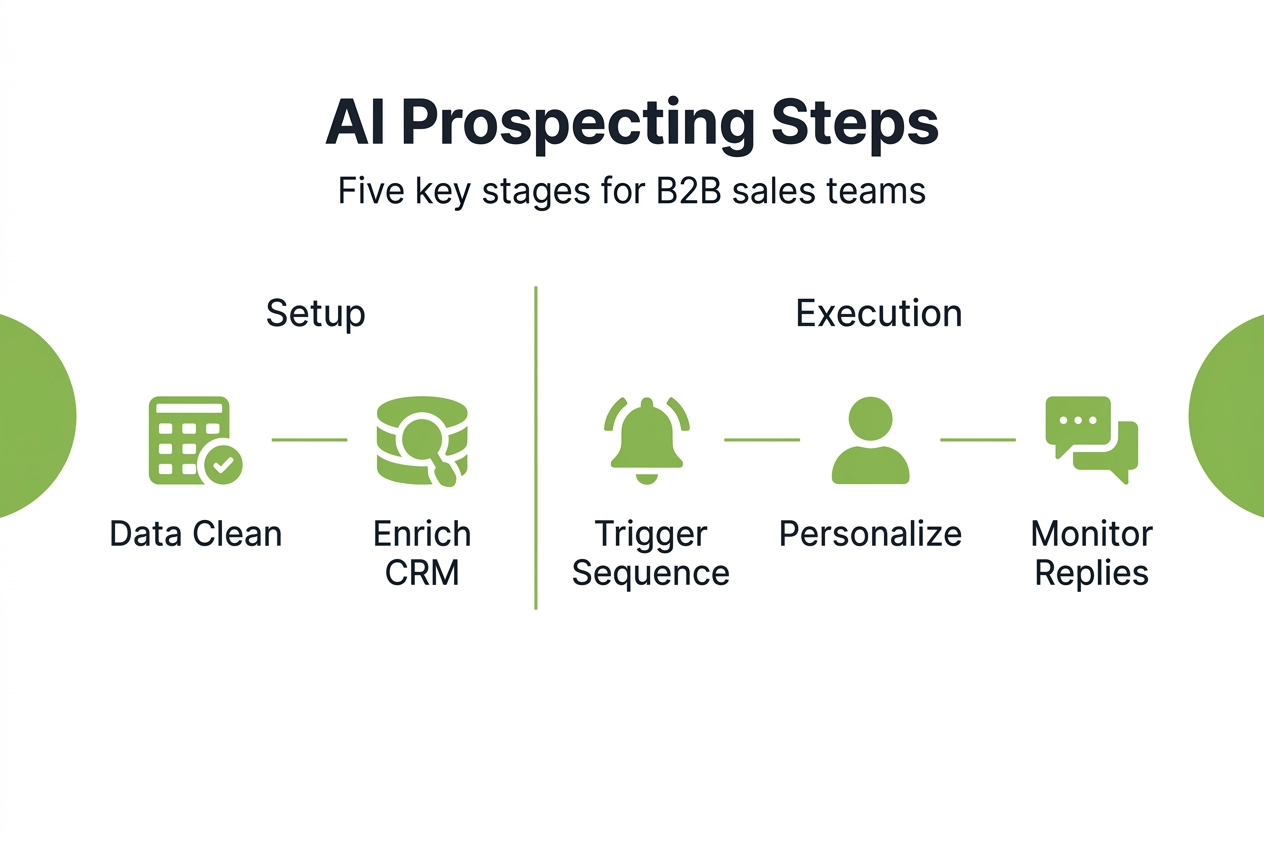
Implementing AI prospecting follows a structured sequence that maximizes efficiency while maintaining quality. Each step builds on the previous, creating a systematic approach to lead generation that scales predictably.
-
Signal detection and intent monitoring: AI continuously scans target markets for buying signals. The system tracks website visits, content downloads, job postings, technology changes, funding announcements, and competitor mentions. These signals prioritize prospects showing active interest or experiencing triggering events that create buying opportunities.
-
Automated data enrichment: When signals identify promising prospects, AI immediately enriches their profiles. The system updates contact details, verifies email addresses, adds firmographic data, maps organizational structure, and identifies decision-makers. Real-time enrichment ensures your team reaches out with current, accurate information.
-
AI-driven personalized outreach: The system crafts contextual messages referencing specific prospect situations. AI analyzes company news, recent achievements, pain points, and industry trends to create relevant talking points. Each email feels individually written, not template-based, dramatically improving engagement rates.
-
Systematic sequencing and follow-up: AI manages multi-touch campaigns across email, phone, and social channels. The system schedules follow-ups based on engagement patterns, adjusts messaging based on previous interactions, and persists through multiple attempts without appearing pushy. Dedicated warm-up infrastructure maintains high delivery rates throughout extended sequences.
-
Human qualification and handoff: Sales reps review AI-generated responses to validate lead quality before investing time in discovery calls. This human-in-the-loop process prevents wasted effort on unqualified prospects while allowing AI to handle initial screening at scale.
“The best AI prospecting systems combine machine efficiency with human judgment. Automate the repetitive tasks but keep humans involved in qualification decisions to maintain quality standards.”
Pro Tip: Configure your AI system to pause sequences when prospects show engagement signals like email opens or link clicks. This prevents automated follow-ups from interrupting active conversations and demonstrates responsiveness.
Explore AI prospecting workflows to see detailed implementation examples. The key is maintaining infrastructure health while the AI operates, regularly reviewing deliverability metrics, and adjusting personalization parameters based on response patterns.
Personalized outreach using AI: best practices
AI-powered personalization transforms generic email blasts into contextually relevant conversations. The technology analyzes prospect data points including company size, industry vertical, recent news, technology stack, team structure, and engagement history to craft messages that resonate. This approach scales thousands of personalized emails while maintaining high relevance, drastically improving reply rates compared to templated outreach.
Generic templates create buyer fatigue and signal low effort. Recipients instantly recognize mass emails and delete them without reading. AI overcomes this by generating unique message variants that reference specific prospect situations. The system might mention a recent funding round, congratulate a new product launch, or reference a shared industry challenge based on real-time data.
Best practices for AI-driven personalization:
- Reference specific prospect achievements or news in opening lines
- Customize value propositions based on company size and industry
- Adjust messaging tone to match organizational culture signals
- Include relevant case studies or examples from similar companies
- Time outreach based on prospect engagement patterns and time zones
Maintaining sender reputation requires careful attention to engagement metrics. Monitor bounce rates, spam complaints, and unsubscribe requests closely. High-quality personalization naturally improves these metrics by sending relevant content to interested recipients. Deliverability suffers when AI personalization fails and prospects mark messages as spam.
Pro Tip: Use AI to identify the optimal sending time for each prospect based on their previous email engagement patterns. Personalization extends beyond message content to delivery timing, significantly improving open rates.
Review AI outreach personalization tips for advanced techniques. The goal is making each recipient feel the message was crafted specifically for them, even though AI generated it at scale. This balance between automation and authenticity defines successful AI prospecting campaigns.
Common mistakes in AI prospecting and how to avoid them
Poor data quality undermines AI prospecting from the start. Inaccurate contact information, outdated company records, and incomplete profiles cause AI systems to target wrong prospects or craft irrelevant messages. Sales teams waste time on bounced emails and unqualified conversations. Solution: Implement strict data hygiene processes with regular audits, verification workflows, and enrichment updates before launching campaigns.
Using generic AI templates creates recipient fatigue and damages brand perception. Many companies deploy AI prospecting with minimal customization, flooding inboxes with obviously automated messages. Prospects recognize these patterns instantly and ignore them. Solution: Invest time in training AI models on your specific value propositions, successful past conversations, and industry-specific language to generate truly personalized outreach.
Neglecting sender reputation risks deliverability and potential blacklisting. Companies often scale AI prospecting too quickly, overwhelming recipients and triggering spam filters. Email providers notice suspicious sending patterns and downgrade sender scores. Solution: Gradually increase sending volume, maintain dedicated infrastructure, monitor reputation metrics daily, and immediately address any deliverability issues.
Ignoring human review produces spammy, low-quality responses that waste sales time. Over-reliance on generic AI content harms engagement when systems pass unqualified leads to sales teams. Reps spend hours on discovery calls with prospects who lack budget, authority, or genuine interest. Solution: Implement human qualification checkpoints where reps review AI-generated responses before scheduling meetings.
| Common Mistake | Negative Impact | Best Practice Solution |
|---|---|---|
| Dirty CRM data | Wrong targeting, low ROI | Regular audits and enrichment |
| Generic templates | Recipient fatigue, poor engagement | Custom AI training on brand voice |
| Reputation neglect | Blacklisting, low deliverability | Gradual scaling with monitoring |
| No human review | Wasted time on unqualified leads | Human-in-the-loop qualification |
Additional pitfalls include:
- Failing to test message variants before full deployment
- Ignoring unsubscribe requests and spam complaints
- Sending too many follow-ups without engagement signals
- Not segmenting audiences for targeted messaging
- Overlooking compliance requirements for data usage and outreach
Explore how balancing AI and human qualification improves results. The most successful AI prospecting operations maintain strict quality controls while leveraging automation for scale. This combination prevents common errors that derail campaigns and preserves brand reputation in target markets.
Expected results and measurable outcomes
AI prospecting delivers quantifiable improvements across multiple sales metrics. Companies implementing these systems report 28% higher response rates compared to manual outreach methods. Conversion rates from initial contact to qualified opportunity increase by 25% on average. Sales reps save 4 to 7 hours weekly by eliminating manual research and follow-up tasks, redirecting that time toward closing deals.
Revenue attribution becomes clearer with AI prospecting systems. The technology tracks every touchpoint from initial signal detection through closed deal, providing visibility into which campaigns and message variants drive results. Pipeline velocity improves as AI maintains consistent engagement, reducing the time prospects spend in each sales stage. Companies typically see 15% to 20% faster deal cycles after implementing AI workflows.
Realistic timelines for measurable benefits:
- Weeks 1 to 4: Infrastructure setup, data cleansing, AI training
- Weeks 5 to 8: Initial campaigns launch, early engagement metrics appear
- Weeks 9 to 12: Response patterns stabilize, optimization opportunities emerge
- Month 4 onward: Full ROI realization with consistent qualified lead flow
| Key Performance Indicator | Manual Prospecting Baseline | AI Prospecting Target |
|---|---|---|
| Response rate | 3% to 5% | 28% to 35% |
| Qualified lead conversion | 8% to 12% | 25% to 30% |
| Weekly research hours per rep | 6 to 8 hours | 1 to 2 hours |
| Average deal cycle | 90 days | 70 to 75 days |
Measuring success requires tracking the right metrics. Monitor email deliverability rates, open and click-through percentages, response rates, meeting booking ratios, and lead qualification percentages. Compare these against baseline manual prospecting performance to quantify improvement. Track sender reputation scores to ensure infrastructure health supports sustained campaigns.
“80% of B2B companies adopting AI prospecting report measurable revenue growth within six months. The technology pays for itself through time savings alone, with lead quality improvements providing additional ROI.”
Continuous optimization sustains outcomes over time. AI systems learn from every interaction, refining targeting criteria, message personalization, and send timing. Review performance weekly, adjust parameters based on engagement patterns, and test new approaches systematically. Check AI lead generation benchmarks to understand industry standards and set realistic improvement goals.
Unlock AI prospecting success with Lickfold Digital AI experts
Transforming your lead generation with AI requires strategic planning and expert implementation. Lickfold Digital specializes in deploying AI-driven prospecting systems tailored to B2B sales teams at medium and large companies. Our approach combines infrastructure setup, AI agent configuration, personalized outreach design, and ongoing optimization to deliver qualified leads consistently.
We handle the technical complexity while you focus on closing deals. Our team builds dedicated email infrastructure, integrates enrichment services, trains AI models on your value propositions, and implements human qualification workflows. Lickfold Digital AI experts ensure your prospecting system maintains high deliverability, generates relevant messaging, and passes only qualified opportunities to your sales team.
Book your free session to discuss your lead generation challenges and explore how AI prospecting fits your growth strategy. We’ll analyze your current process, identify automation opportunities, and design a custom implementation roadmap. Take the first step toward predictable pipeline growth with AI-powered workflows.
FAQ
What is AI prospecting and how does it differ from traditional methods?
AI prospecting uses machine learning to automatically identify, research, and engage potential customers at scale. Traditional methods rely on manual list building, generic email templates, and inconsistent follow-up. AI analyzes thousands of data points to target ideal prospects, crafts personalized messages based on specific company context, and systematically nurtures relationships until prospects respond.
What infrastructure is essential to start AI prospecting?
You need clean CRM data, integrated enrichment services providing firmographics and intent signals, dedicated warmed-up email accounts with strong sender reputation, and AI-powered outreach automation tools. These components work together to ensure accurate targeting, high deliverability, and effective personalization. Without proper infrastructure, AI prospecting campaigns fail to reach inboxes or engage recipients meaningfully.
How can I maintain personalization at scale using AI?
AI analyzes prospect signals including company news, technology stack, industry challenges, and engagement history to craft contextually relevant messages. Train your AI system on successful past conversations and specific value propositions rather than using generic templates. Reference actual prospect situations in opening lines and customize talking points based on company size and vertical to maintain authenticity.
What common mistakes should I avoid with AI prospecting?
Maintain accurate data through regular audits and enrichment, personalize messages beyond generic templates, manage sender reputation with gradual scaling and monitoring, and include human review to qualify leads before sales handoff. Ignoring these practices results in low engagement, deliverability problems, and wasted sales time on unqualified prospects. Quality controls separate successful AI prospecting from failed automation attempts.
What results can I expect from implementing AI prospecting?
Expect 28% or higher response rate increases, 25% improvement in conversion from contact to qualified opportunity, and 4 to 7 hours saved weekly per sales rep. Deal cycles typically shorten by 15% to 20% as AI maintains consistent engagement throughout the buying journey. Most companies see measurable revenue growth within six months, with 80% of adopters reporting positive ROI from improved lead quality and sales efficiency.